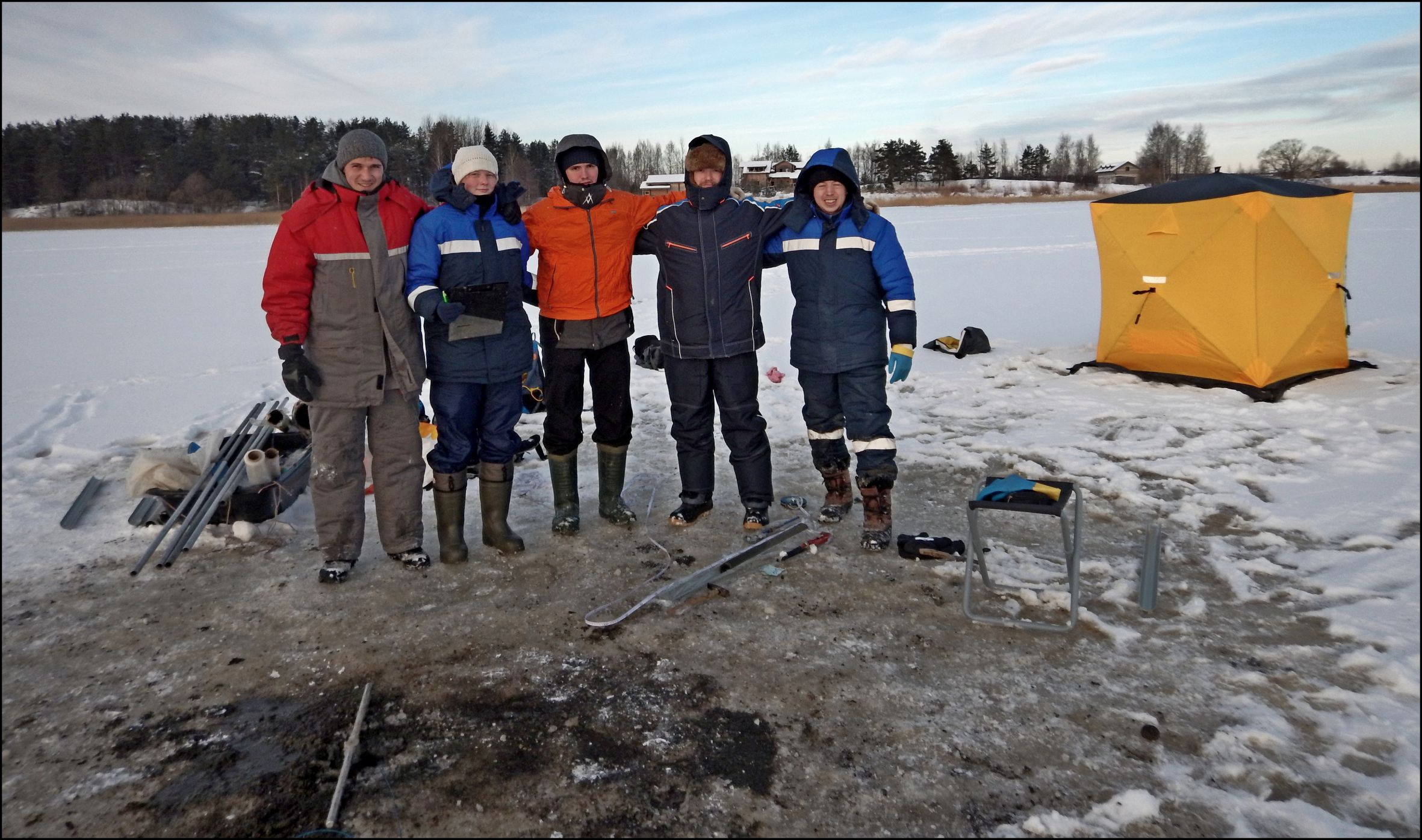


The Environmental Paleoarchives Laboratory was established in 2019 as part of the program for creating youth laboratories by the Ministry of Education and Science of Russia.
Research Focus
A detailed forecast of environmental changes and risk assessment of extreme and catastrophic processes require in-depth knowledge of the trends, periodicity, and variability of natural parameters, as well as the magnitude and recurrence intervals of natural extremes in the past. Classical paleogeographic methods are insufficient to obtain such information. Over the past two decades, modern paleogeography research has been characterized by high temporal resolution (annual and higher) and a transition from qualitative reconstructions to quantitative assessments of environmental parameters.
Detailed reconstructions and the identification of individual extreme events are possible only through the study of high-information paleoarchives — deposits accumulated over long periods with high regularity (peat bogs, lake sediments, speleothems, and in some cases river floodplain deposits). There is a trend toward more detailed investigation of paleoarchives, moving from discrete to quasi-continuous (scanning) analysis, and the development and application of new quantitative methods based on various physical effects (light and X-ray diffraction, X-ray fluorescence, X-ray and optical spectroscopy, gamma spectrometry).
The role of microtexture analysis and surface structure of mineral particles is increasing, including using scanning electron microscopy. Recently, a new stratigraphic and geochronological method — cryptotephrochronology — has seen rapid development. It involves locating and geochemically attributing micro-particles of volcanic glass dispersed over large distances from volcanic sources (sometimes globally). This method allows high-precision dating of deposits, reliable regional stratigraphic correlations, and the identification of previously unknown volcanic eruptions and past atmospheric circulation pathways.
Research Goal:
To diagnose, determine parameters, and date Pleistocene and Holocene natural and climate events across Russia through detailed analysis of sedimentary chronicles of various types.
Contacts
Address:
119017 Moscow, Staromonetny Lane, Building 29s4, Institute of Geography (Russian Academy of Sciences), Environmental Paleoarchives Laboratory
Head of the Laboratory:
Evgeny Konstantinov, Ph.D.
eakonstantinov@yandex.ru
Scientific Secretary:
Kseniya Filippova
xenia.filippova@igras.ru